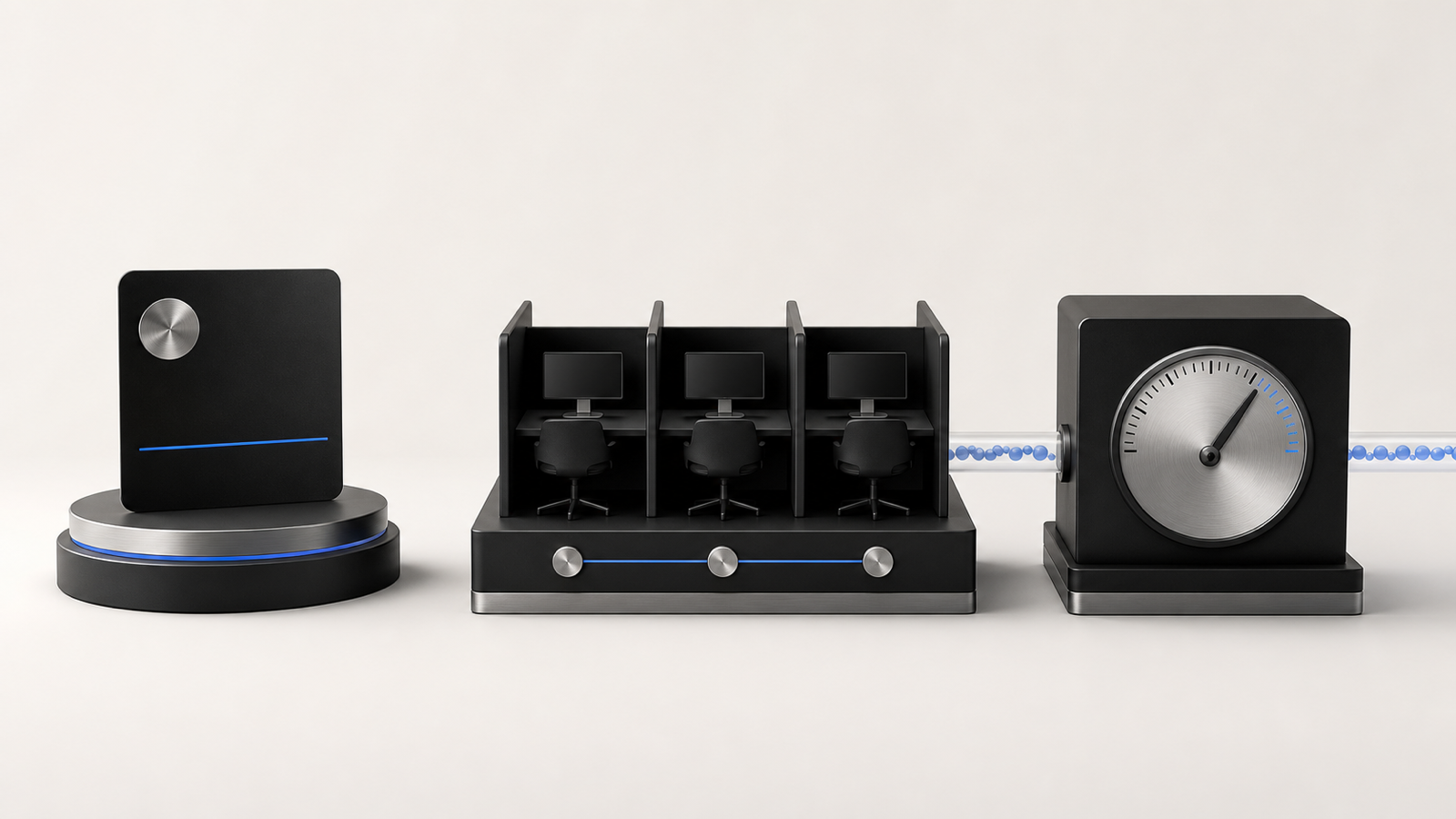
Two AI invoices can look wildly different: one product might cost twenty dollars a month per person while another runs to four hundred dollars for a single afternoon of usage. The confusion is reasonable. AI pricing is a mix of three different business models wearing similar-looking price tags, and sellers rarely explain which one you are actually buying into. Let's walk through them plainly, because the model you pick determines whether the tool saves money or quietly wastes it.
The first model is the one most people already know without knowing they know it: the flat monthly subscription. This is a ChatGPT Plus account, a Claude Pro or Team seat, a Gemini subscription — you pay a fixed price, usually somewhere between twenty and thirty dollars a month per person, and you get access up to some usage ceiling that's generous enough most people never hit it. It's consumer pricing dressed up for business use. The appeal is obvious: you know exactly what it costs before the month starts, and there's no invoice surprise waiting for you. The catch is that you're paying the same price whether that person uses it twice a day or twice a month.
The second model is metered, usage-based pricing — what people mean when they say 'the API.' Instead of paying a person-price, you pay for consumption directly: the model breaks text into small chunks called tokens, and you're billed a fraction of a cent per token, for every token it reads and every token it generates. There's no seat, no login tied to a human being, no monthly ceiling. If nobody uses it that day, you pay nothing. If your system processes ten thousand customer emails overnight, you pay for ten thousand emails' worth of tokens, and the bill reflects that precisely. This is the model almost every custom tool, chatbot, or backend automation runs on, because software doesn't need a seat — it needs to make calls and get billed for exactly what it did.
The third model is per-seat enterprise licensing, and it's really just the subscription model scaled up and wrapped in procurement paperwork. A vendor sells you a block of licenses — fifty seats, two hundred seats — at a negotiated per-person rate, often with added features like admin controls, security certifications, or dedicated support that the consumer version doesn't offer. It looks like the first model but the economics and the sales motion are different: someone in finance or IT is signing an annual contract, not an individual swiping a credit card, and the price per seat usually assumes most of those seats will actually get used regularly.
Matching the model to the usage pattern is the whole game. If you've got a handful of people who each use an AI tool steadily throughout their day — a marketing person drafting copy every morning, an ops person summarizing documents constantly — a flat subscription per person is fine and predictable. If you're building something that runs in the background, unattended, processing whatever volume of work shows up — a chatbot answering customer questions, a script that tags incoming support tickets — metered API pricing is the only sane choice, because you're paying for machine work, not human attention, and that work doesn't come in tidy monthly allotments.
A common small-business trap is the per-seat purchase made on hope rather than data. A business owner gets pitched fifty enterprise seats because 'the whole company should have access,' and eighteen months later three people are using it constantly, twelve people log in once a month, and thirty-five seats are dead weight that renewed automatically because nobody audited the usage report. Per-seat pricing only pays off when usage is actually broad. When usage is concentrated in a handful of people who really lean on the tool, the business is funding dozens of seats for people who barely touch it.
The opposite trap shows up with metered pricing: the surprise bill. Usage-based pricing is useful when volume is predictable or low, and genuinely dangerous when it isn't, because nothing stops a poorly designed automation from calling the API in a loop, or a spike in customer volume from turning a fifty-dollar month into a five-thousand-dollar one. Fictional example: A document-processing pipeline works in testing, then a bug quietly reprocesses the same batch three times and the invoice becomes the first alert that anything is wrong. Metered pricing demands that somebody watch usage dashboards and set spending alerts rather than simply trusting costs to stay reasonable.
My honest advice for a small or mid-size business with no engineers on staff: start with subscriptions for the humans and metered pricing for the machines, and don't go near per-seat enterprise contracts until you have real usage data proving that broad adoption is actually happening, not just hoped for. Give the two or three people who'll actually use an AI tool daily a normal subscription. If you want to build something that runs on its own — an intake form that drafts responses, a tool that summarizes incoming documents — build it on metered API pricing, but put a hard spending cap on the account from day one, because prevention is a lot cheaper than a bad surprise.
The pattern underneath all of this is simple: pricing structure is not a technical detail, it's a bet about your own usage pattern, and vendors are not going to tell you when you're making a bad one. Nobody at a software company loses a sale by letting you overbuy fifty seats you don't need. The responsibility for matching the pricing model to how your team actually works sits with you, and it's worth an hour of honest usage-checking before you sign anything annual.
If you're staring at a pricing page right now trying to figure out which of these three models actually fits your business, that's exactly the kind of question I like working through with people — no upsell, just an honest read on what you'd actually use versus what you'd be paying for. I write about this kind of thing regularly at 013labs.com, so if this was useful, there's more where it came from.