A new model lands at the top of a benchmark and suddenly the tool a business set up three months ago can feel obsolete. That reaction is understandable — the marketing around AI models is built to make you feel one upgrade behind. But chasing the top of a leaderboard is not a strategy. The leaderboard is measuring something; it is usually not measuring the thing that matters for your business.
Here's the problem with leaderboards specifically. They're built around benchmark tasks — hard reasoning puzzles, coding challenges, standardized tests — that have almost nothing to do with what a plumbing company needs when it wants to auto-categorize incoming service requests, or what a boutique law firm needs when it wants a first-pass summary of a deposition transcript. A model can be excellent at olympiad math and mediocre at the specific, narrow, repetitive thing you actually need done. Ranking is a single number pretending to summarize a hundred different capabilities. Your task doesn't care about the average.
So instead of asking "which model is best," ask "best for what, at what volume, with what tolerance for being wrong, and how fast do I need the answer?" Those four questions — task complexity, cost sensitivity, latency, and acceptable error — are the real levers. Get honest answers to those and the model choice mostly falls out on its own. Skip them and you'll either overpay for capability you don't need or underpay and get burned by capability you did need.
Start with complexity, because it's easy to misjudge. A lot of what businesses actually want automated is not hard reasoning — it's pattern recognition. Sorting emails into categories, pulling a shipping address out of a paragraph of text, deciding if a review is positive or negative, drafting a routine follow-up message. These are tasks a smaller, cheaper, faster model handles just fine, because they don't require the model to hold multiple steps of logic in its head or weigh competing considerations. Putting a top-tier, expensive model on a task like this can feel safer even when a lighter model does it just as well for a fraction of the cost and latency. Save the heavyweight for tasks that actually need multi-step reasoning, ambiguity resolution, or synthesis across a lot of context — drafting a nuanced proposal, reasoning through a pricing strategy, or untangling a messy contract dispute.
Next is cost sensitivity, and this is really a volume question in disguise. A task you run twenty thousand times a month behaves completely differently, economically, than a task you run twice a year. Fictional example: A business routes thousands of simple inbound inquiries through the same premium model it uses for quarterly strategic planning. The inquiries only need basic triage — billing, shipping, or complaint — so the premium model adds a real line item without adding useful quality. The quarterly document is exactly where stronger reasoning earns its cost, because the model expense is trivial next to the cost of getting the analysis wrong.
Latency is the factor people forget until it bites them. If a customer is sitting in a chat window waiting for a response, a few extra seconds feels like an eternity and will show up in your satisfaction numbers whether or not the answer is technically better. If the task is running overnight in a batch job — reconciling a week of transactions, generating draft summaries for tomorrow's meetings — nobody's watching a spinner, and you can afford a slower, more thorough model without anyone noticing. The same task can call for a different model purely because of where in your workflow it sits, real-time versus back-office, even if the actual content of the task is identical.
The last factor, and the one I think is most underrated, is how much accuracy risk you can tolerate, which really means: what happens when this is wrong, and can a human catch it before it does damage. A model-generated first draft of a marketing email that a person reviews before sending has a wide margin for error — a mistake gets caught and fixed with no real cost. A model deciding refund amounts automatically, or summarizing a legal document that goes straight to a client with no review, has almost no margin — a mistake there is a real mistake, not a typo. The threshold for how capable, how carefully checked, and how conservative your model choice needs to be should track the size of the blast radius if it's wrong, not some abstract notion of quality.
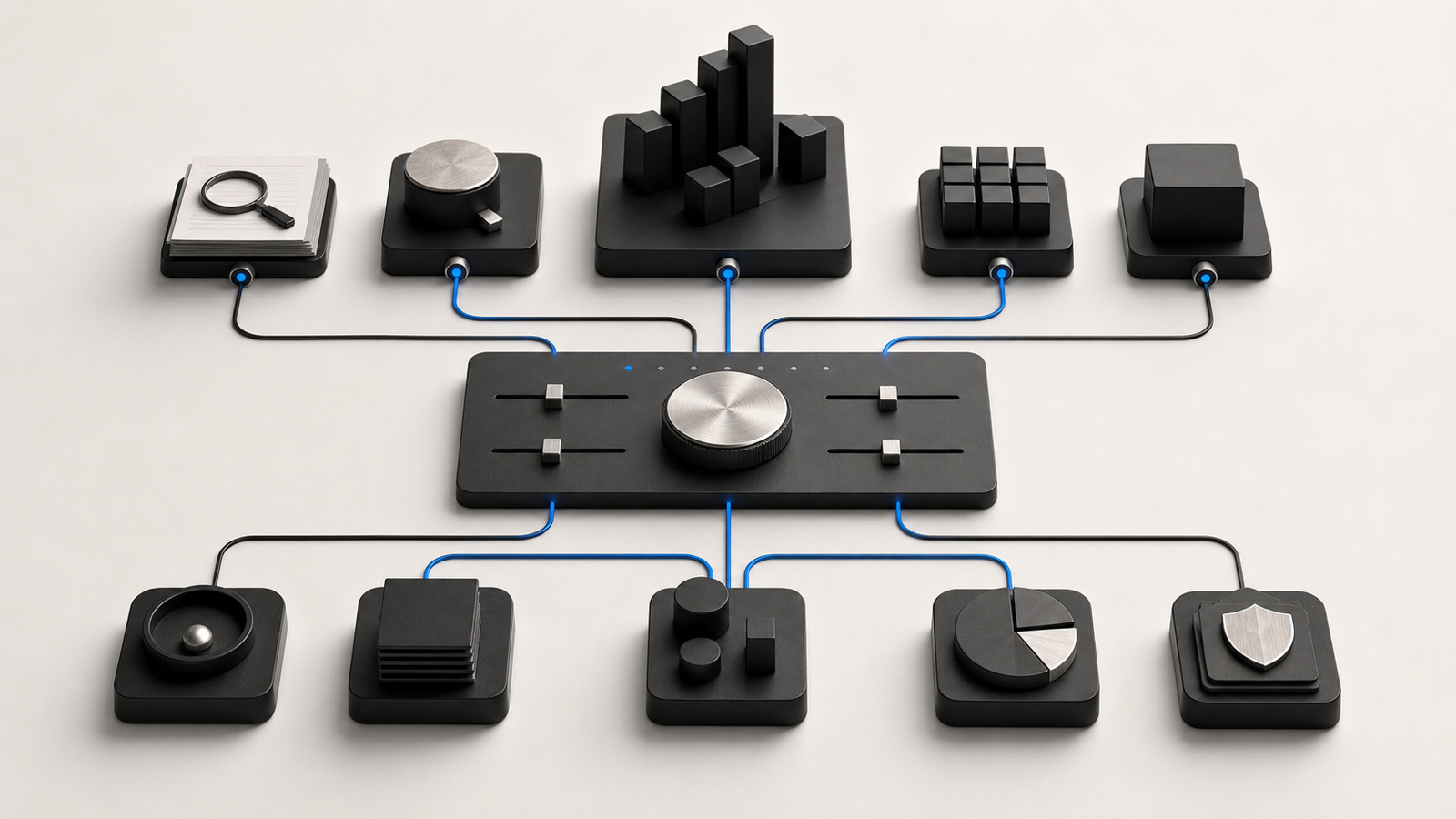
Put those four together and you stop thinking of "the model" as a single decision for your whole business and start treating it as a decision made per task, sometimes per workflow. A sound setup rarely runs one model for everything. It uses something small and fast for high-volume, low-stakes, simple work, and reserves something more capable and expensive for rare, complex, high-stakes work, sometimes in the same pipeline. That mix is not a compromise; it is the correct answer because the two ends of that spectrum are different decision problems.
This is also why I'm not worried about giving you a framework instead of a specific recommendation. The specific recommendation expires in a few months when a new model ships. The framework — how complex is this really, how many times will I run it, how much does the delay matter, what happens if it's wrong — doesn't expire. It'll still be the right set of questions to ask two years from now, whatever's sitting at the top of whatever leaderboard exists then.
If you're not sure where your own tasks fall on these dimensions, the fastest way to find out is to actually test — run the same real task through a couple of different tiers of model, on your own data, and look at what breaks and what doesn't. Guessing from a leaderboard score is a worse predictor of your outcome than five minutes of testing with the actual thing you're trying to automate.
I write about this kind of practical, unglamorous decision-making at 013labs.com, because it's usually more useful to a small business than another headline about a new model beating a benchmark.