"We probably just need to fine-tune a model" often appears in vendor decks and technical recommendations as though it were a magic solution. What the business actually needs may be simpler and cheaper. Fine-tuning, RAG, and better prompting solve different problems, so it is worth going under the hood before committing money to the most complicated option.
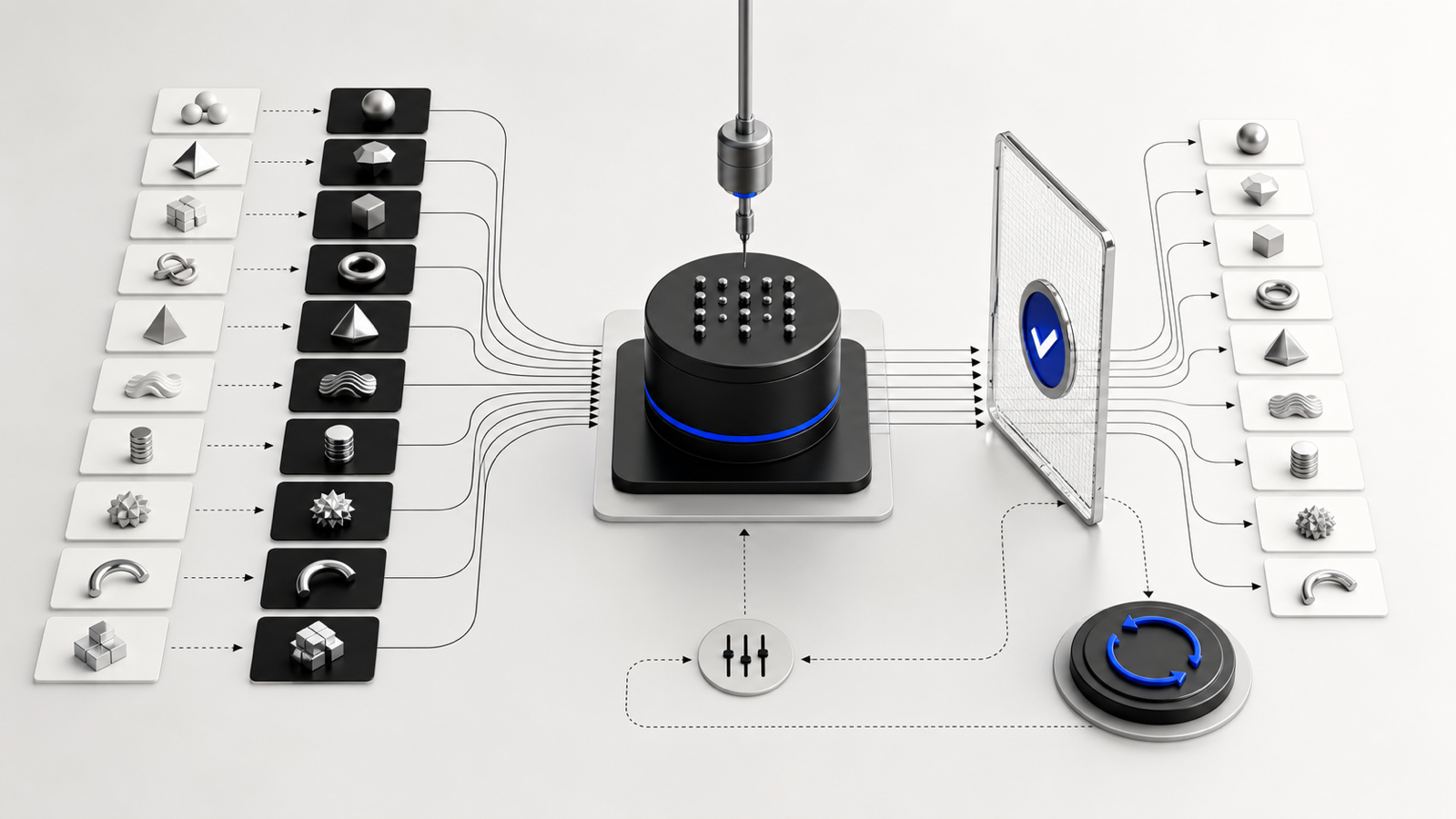
Mechanically, fine-tuning is this: you take a model that's already been trained, and you train it some more, on your own examples, so its behavior shifts. You're not starting from scratch. You're taking a model that already knows language, reasoning, and general world knowledge, and nudging its internal parameters using a dataset of inputs paired with the outputs you wanted it to produce. Each example runs through the model, the model's actual output gets compared to your target output, and the difference between the two gets used to adjust the model's weights slightly so that next time, on similar input, it's more likely to produce something closer to what you wanted. Do that over enough examples and enough passes, and the model's default behavior actually changes. Done well, it's shifting general tendencies to look more like your examples, not memorizing them verbatim — though push the training too far on too little data and it can tip into doing exactly that, which is one of the failure modes that takes real judgment to catch, and one I'll come back to.
That distinction matters because it tells you what fine-tuning is and isn't good for. It changes behavior, tone, format, and style. It does not reliably inject new factual knowledge in a way you can trust. If you fine-tune a model on a thousand examples of your support team's writing style, it will start writing in that style. If you fine-tune it on a thousand pages of your product catalog hoping it will "know" your current inventory, you're setting yourself up for a model that answers confidently and sometimes wrong, because fine-tuning bakes patterns into weights, not facts into a lookup table it can cite. If the goal is getting current, accurate, specific information into a model's answers, that's what retrieval is for, and it's a fundamentally different mechanism doing a fundamentally different job.
Here's what fine-tuning actually requires in practice, and this is the part people skip past. First, a real dataset of good examples, and I mean actually good and actually a dataset. Not twenty emails somebody found in a folder. You need enough labeled examples, consistently formatted, consistently correct, covering the range of situations the model will actually see in production, to teach a clear pattern rather than a scatter of noise. Most businesses that think they want to fine-tune don't have this sitting around ready to use. They have to build it, which means someone has to define what "good" looks like, go generate or collect enough real examples of it, clean out the inconsistent or contradictory ones, and keep doing that as edge cases show up. That's not a weekend project. It's closer to building a small internal product.
Second, it requires actual technical expertise to do well, not just access to a fine-tuning API. Somebody has to make real decisions: how much data is enough, how many training passes before the model starts overfitting and memorizing your examples instead of generalizing from them, how to evaluate whether the fine-tuned model is actually better than the base model with a good prompt, and how to catch it quietly getting worse at things you didn't train it on, which happens more than people expect. Running the training job is the easy part. Knowing whether it worked, and being honest with yourself when it didn't, is the part that takes real skill, and it's the part most small businesses have no one on staff to do.
Third, and this is the one almost nobody budgets for: ongoing maintenance. The model you fine-tuned is tied to a specific base model version, and those get updated and deprecated on a schedule you don't control. When the underlying model gets replaced by a newer generation, your fine-tune doesn't automatically inherit the improvements. You're stuck choosing between re-running the whole process on the new base model with fresh data, or staying on an aging model that's slowly falling behind everything else on the market. Fine-tuning isn't a one-time project you finish and walk away from. It's a standing commitment to keep re-earning the result every time the ground shifts under it, and the ground shifts more often than people think.
Fictional examples: One business wants customer-support drafts to sound like its brand instead of generic AI copy. A strong system prompt with a handful of example exchanges can solve that tone problem without a training pipeline. Another business wants an assistant to know constantly changing service pricing and availability. Fine-tuning would freeze that knowledge at training time; retrieval from the live pricing sheet is the simpler way to keep the answer current.
There are cases where fine-tuning genuinely earns its cost, and they're narrower than people assume. It tends to make sense when you need a very particular output format or classification behavior at real volume, reliably enough that stuffing instructions into every prompt becomes expensive or unreliable at scale. It makes sense when the task is narrow, well-defined, and you have or can build a solid dataset of examples, and where the payoff of a faster, cheaper, more consistent model justifies the ongoing cost of keeping it maintained as models change underneath you. That's a real category. It's just a much smaller category than the number of people who say "fine-tune" out loud in meetings.
The honest bar for needing fine-tuning is higher than almost anyone assumes going in, because the sales pitch for it only ever describes the upside and never the maintenance bill. If you're a small or mid-size business without engineers on staff, the ongoing cost of babysitting a fine-tuned model through every base model update is often the thing that quietly kills the ROI, even when the initial results looked great in testing. Before you commit to that, it's worth being ruthlessly honest about whether a sharper prompt or a retrieval layer over your own documents would get you eighty percent of the way there for a fraction of the cost and none of the long-term babysitting.
013 Labs publishes guidance like this because unnecessary complexity is expensive. If you are considering fine-tuning, get a second opinion before committing real money to it.